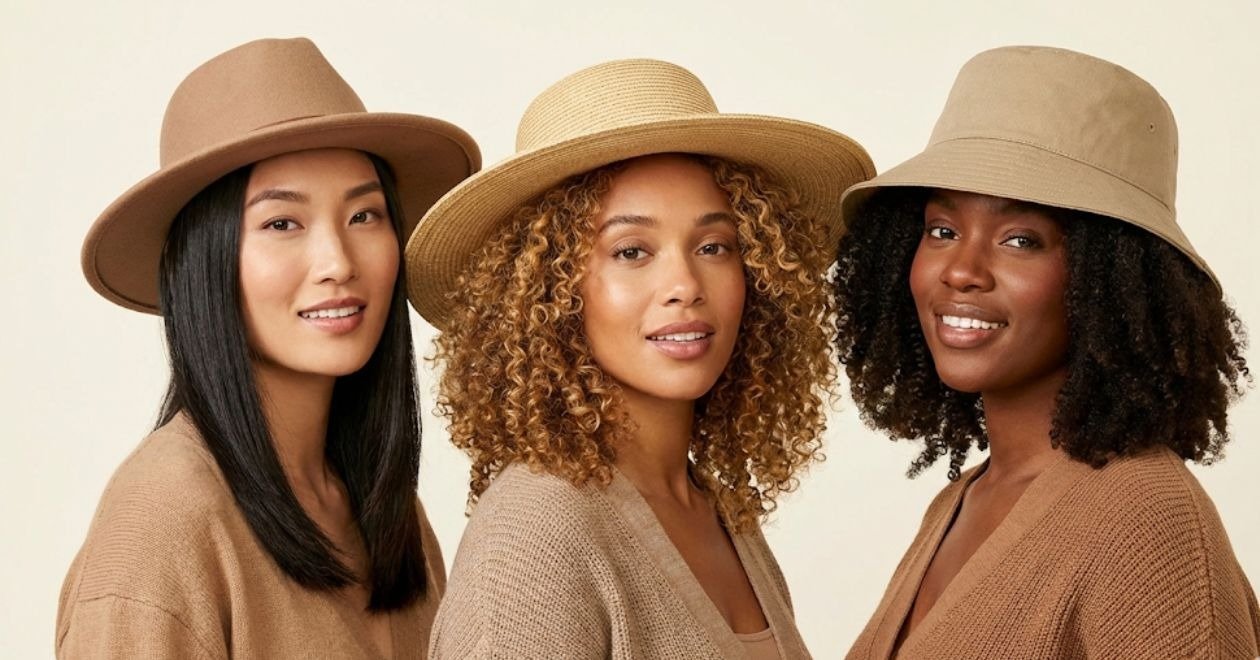
There’s a specific frustration that comes with finding the perfect hat only to take it off and see your hair completely flattened, frizzy, or shaped awkwardly. It’s not your hair’s fault, and it’s not the hat’s fault. It’s a mismatch between hair texture and hat design that nobody warned you about. The truth is, hats for different hair types require different considerations, and understanding these differences transforms hat-wearing from occasionally disappointing to consistently successful.
Your hair’s texture, volume, and natural shape dramatically affect which hats work best and how to style them for optimal results. Straight hair faces completely different challenges than curly, coily, or textured hair. What works beautifully for one texture might prove disastrous for another. This isn’t about limitation. It’s about knowledge that helps you choose and style hair-friendly hats that complement rather than fight your natural texture.
This guide examines how different hair types interact with various hat styles, offering practical solutions that honor your hair’s unique characteristics whilst maintaining the style you want. Because the right hat shouldn’t mean sacrificing good hair days.
Why Hair Type Matters When Choosing a Hat
Understanding the relationship between hair texture and headwear prevents frustration and opens possibilities you might not have considered.
Volume, Density, and Shape
Hair volume affects hat fit fundamentally. Thick, high-volume hair (whether straight, curly, or textured) requires more crown room than fine, low-volume hair. A hat that fits someone with fine hair perfectly might crush someone else’s natural volume, creating uncomfortable pressure and unflattering shapes.
Density matters too. Dense hair creates more friction against hat interiors, potentially causing static in straight hair or frizz in curly textures. This friction also affects how securely hats stay positioned. Very slippery straight hair might cause hats to slide, whilst high-texture hair creates grip that keeps hats firmly in place.
Natural shape determines how your hair responds to hat compression. Straight hair often flattens under hats, losing body. Curly hair compresses but springs back when released, though the curl pattern might become temporarily distorted. Textured and coily hair resists complete flattening but can develop awkward creases if the hat doesn’t accommodate its volume properly.
How Fabric Interacts With Hair
Different materials create different hair interactions. Wool can cause static in straight hair whilst providing necessary grip for slippery textures. Cotton generally proves neutral, neither creating excessive friction nor causing static. Synthetic materials like polyester might generate static electricity, particularly in dry climates or heated indoor environments.
Frizz-reducing hat materials matter tremendously for curly and textured hair. Rough interior fabrics create friction that lifts cuticles, causing frizz. Smooth linings (particularly satin or silk) allow hair to glide without disruption, maintaining definition and reducing frizz.
Climate’s Impact
Humidity affects hair dramatically, and hats either help or hinder depending on design. In humid conditions, breathable hats prevent moisture accumulation at your scalp, reducing frizz for curly hair. In dry environments, hats that don’t breathe excessively help retain moisture, preventing static in straight hair.
Cold weather presents particular challenges. Winter hats create friction through repeated wearing and removal. They also trap heat close to your scalp, potentially causing sweat that affects curl definition or creates limpness in straight hair.
Best Hats for Straight Hair

Best hats for straight hair leverage the texture’s natural smoothness whilst addressing its tendency toward flattening.
Structured Brims Work Beautifully
Fedoras, trilbies, and cloches complement straight hair perfectly. These volume-friendly hats feature defined shapes that create visual interest your hair’s sleek lines support rather than compete with. The structure provides contrast against straight hair’s smoothness.
Style these hats with your hair worn down for classic elegance, or in low ponytails that sit beneath the hat’s crown without creating awkward bumps. Straight hair’s flexibility allows easy manipulation into shapes that work with structured headwear.
Low-Profile Caps Prevent Excessive Flattening
Baseball caps and low-profile styles work well for straight hair because they don’t require accommodating significant volume. However, choose styles with soft, unstructured crowns rather than rigid caps that leave obvious creases.
Hat fit and comfort for straight hair means ensuring the cap doesn’t grip so tightly that it creates visible lines. Slightly looser fits that allow minimal hair movement prevent that dreaded “hat hair” look.
Winter Beanies With Smooth Linings
Beanies suit straight hair when they feature smooth interior linings that don’t create excessive friction. Slouchy styles that don’t compress your hair completely work better than tight-fitting options that flatten everything.
Wear your hair loose under slouchy beanies, or pull it into low buns that sit at the nape of your neck. High ponytails create awkward bumps that disrupt the beanie’s shape.
Preventing Static and Flatness
Combat static by lightly misting hair with water before putting on hats, or using leave-in products that add slight weight. After removing hats, flip your head upside down and gently shake to restore volume at the roots.
Consider hats with slightly looser crowns that don’t compress hair completely against your scalp. This minimal space allows some natural movement that prevents total flattening.
Best Hats for Curly Hair
Hats for curly hair must accommodate volume whilst maintaining curl definition and preventing frizz.
Wide-Brim Styles Complement Volume
Wide-brim hats balance curly hair’s natural volume beautifully. The substantial brim creates proportions that complement rather than compete with your hair’s fullness. Sun hats, fedoras with generous brims, and floppy styles work particularly well.
These hats allow you to wear hair down without excessive compression. The crown space accommodates curl volume whilst the brim frames your face and hair appealingly.
Bucket Hats for Humidity Control
Bucket hats work wonderfully for curly hair in humid climates. The downward-sloping brim provides sun protection whilst the crown offers enough room for curl volume. Many bucket hats feature breathable fabrics that prevent moisture buildup at your scalp, reducing humidity-induced frizz.
The casual, relaxed fit means bucket hats don’t compress curls as tightly as structured alternatives. This gentler contact maintains curl patterns better.
Loose Beanies That Prevent Curl Compression
Winter presents particular challenges for curly hair. Look for protecting curls under hats through slouchy, oversized beanies that accommodate volume without crushing curl definition.
Satin-lined options prove transformative for curly hair. The smooth satin interior allows curls to glide without friction, maintaining definition whilst preventing frizz. Many brands now offer beanies with built-in satin or silk linings specifically designed for textured hair.
Wear loose beanies pushed back slightly on your head, allowing some curls to frame your face. This prevents total compression whilst maintaining warmth.
Pre-Hat Hair Prep
Apply curl-defining products before wearing hats, allowing them to set briefly. This gives curls structure that helps them bounce back after hat removal. Avoid touching or manipulating curls once products are applied, as this can disrupt curl patterns.
After removing hats, gently scrunch curls to reactivate products and restore definition. Avoid combing or brushing, which creates frizz.
Best Hats for Textured and Coily Hair

Hats for textured hair must provide generous crown room whilst protecting delicate strands from breakage and moisture loss.
Roomy Crowns for Natural Shape Retention
The most important feature for textured and coily hair is adequate crown space. Hats that compress natural volume create uncomfortable pressure and potentially damage hair through excessive friction and breakage.
Look for hats specifically designed with deeper crowns. Bucket hats, wide-brim styles, and oversized beanies typically offer the room textured hair needs. Avoid tight-fitting caps or structured hats with shallow crowns that can’t accommodate natural volume.
Adjustable Back Straps
Adjustability proves crucial because it allows you to customize fit for your hair’s volume. Snapbacks, buckle-back styles, and stretch-fit options work better than fixed-size hats that might fit perfectly on some hair days but feel too tight when you’re wearing particularly voluminous styles.
Hat fit and comfort for textured hair means finding pieces that secure around your head without compressing from above. Adjustable straps achieve this balance.
Breathable Summer Straw Styles
Straw hats with good ventilation work beautifully for protecting textured hair from sun damage whilst allowing scalp breathability. Wide-brim options provide coverage without compression. The natural materials don’t generate static or excessive friction.
Style these hats with natural styles, braids, or protective hairstyles that maintain moisture and definition throughout the day.
Cold-Weather Options That Prevent Breakage
Winter hats pose particular challenges for textured and coily hair, which tends toward dryness and fragility. Choose beanies with satin or silk linings that protect hair from friction-related breakage.
Some excellent options include:
- Slouchy satin-lined beanies that accommodate volume
- Headwraps worn under hats for additional protection
- Wide-band knit hats that cover ears without compressing hair
Apply protective oils or leave-in conditioners before wearing winter hats. This creates a barrier that reduces friction whilst maintaining moisture.
Universal Styling Tips for All Hair Types
Regardless of texture, certain practices improve hat-wearing experiences across the board.
Pre-Hat Haircare
Apply appropriate styling products before wearing hats. For straight hair, this might mean volumizing sprays at roots. For curly hair, curl-defining creams. For textured hair, moisturizing leave-ins or oils. These products help hair maintain its preferred state despite compression.
Allow products to dry or set before putting hats on. Wet products transfer to hat interiors, creating residue buildup and potentially staining fabrics.
Maintaining Shape When Removing Hats
Carry travel-size styling products for touch-ups after removing hats. Dry shampoo restores volume in straight hair. Water or refresh sprays reactivate curls. Oils add sheen to textured styles.
Flip your head upside down and gently shake to restore root volume across all hair types. This simple action redistributes hair and reduces visible compression marks.
Avoiding Friction and Static
Hair protection and style balance means choosing hats with smooth interiors whenever possible. Check for rough seams, scratchy tags, or unfinished edges that create unnecessary friction.
In dry climates or winter months, consider using anti-static spray on hat interiors. For curly and textured hair, ensure adequate moisture through regular deep conditioning treatments that prevent dryness-related frizz.
Ideal Materials for Comfort
Natural fibers generally treat hair more gently than synthetics. Cotton, wool, and silk create less static than polyester or acrylic. However, synthetic performance fabrics designed for moisture-wicking can work well for active pursuits despite their composition.
Satin and silk linings benefit all hair types but prove particularly valuable for curly and textured hair. These smooth materials prevent friction that causes frizz and breakage.
Confidence Comes From Harmony Between Hair and Headwear
Finding hats for different hair types that actually work isn’t about limitation. It’s about understanding which styles complement your hair’s natural characteristics, allowing you to look and feel your best.
The right hat makes you forget you’re wearing one. It sits comfortably, maintains position without adjustment, and when you remove it, your hair looks essentially as you intended. That’s the goal, and it’s absolutely achievable once you know what to look for.
Don’t be afraid to experiment. Your hair texture suggests certain starting points, but personal preference, face shape, and individual style all influence which hats ultimately work best. Try styles outside your assumed comfort zone. A hat you never considered might become your signature piece.
The beauty industry increasingly recognizes that one-size-fits-all advice serves nobody well. Hair texture diversity demands thoughtful consideration in product design and styling guidance. As more brands create hair-friendly hats with features like satin linings, adjustable sizing, and generous crown room, finding pieces that honor your hair’s needs whilst expressing your style becomes easier.
Ready to find hats that work with your hair rather than against it? Browse versatile hat collections designed with diverse hair types in mind, offering options that balance style with the practical considerations that make daily wear genuinely comfortable and confidence-boosting.diverse hair types in mind, offering options that balance style with the practical considerations that make daily wear genuinely comfortable and confidence-boosting.
Read More: JalBiteHealth Guide: Your Complete Roadmap to Better Living
About the Author